Jigsaw Cards plays free in your browser on phone and desktop, no download. Also on App Store, Google Play and Playhop.
How to play
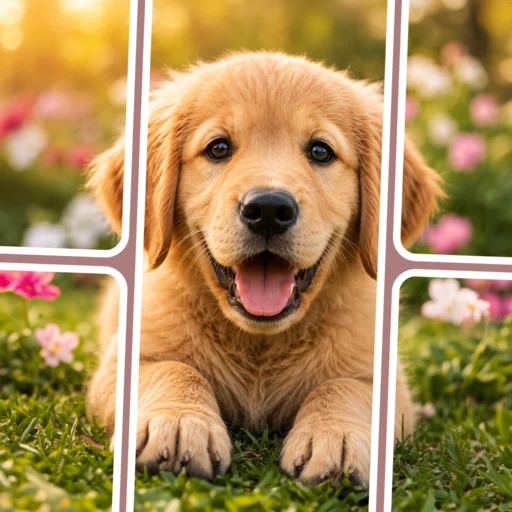
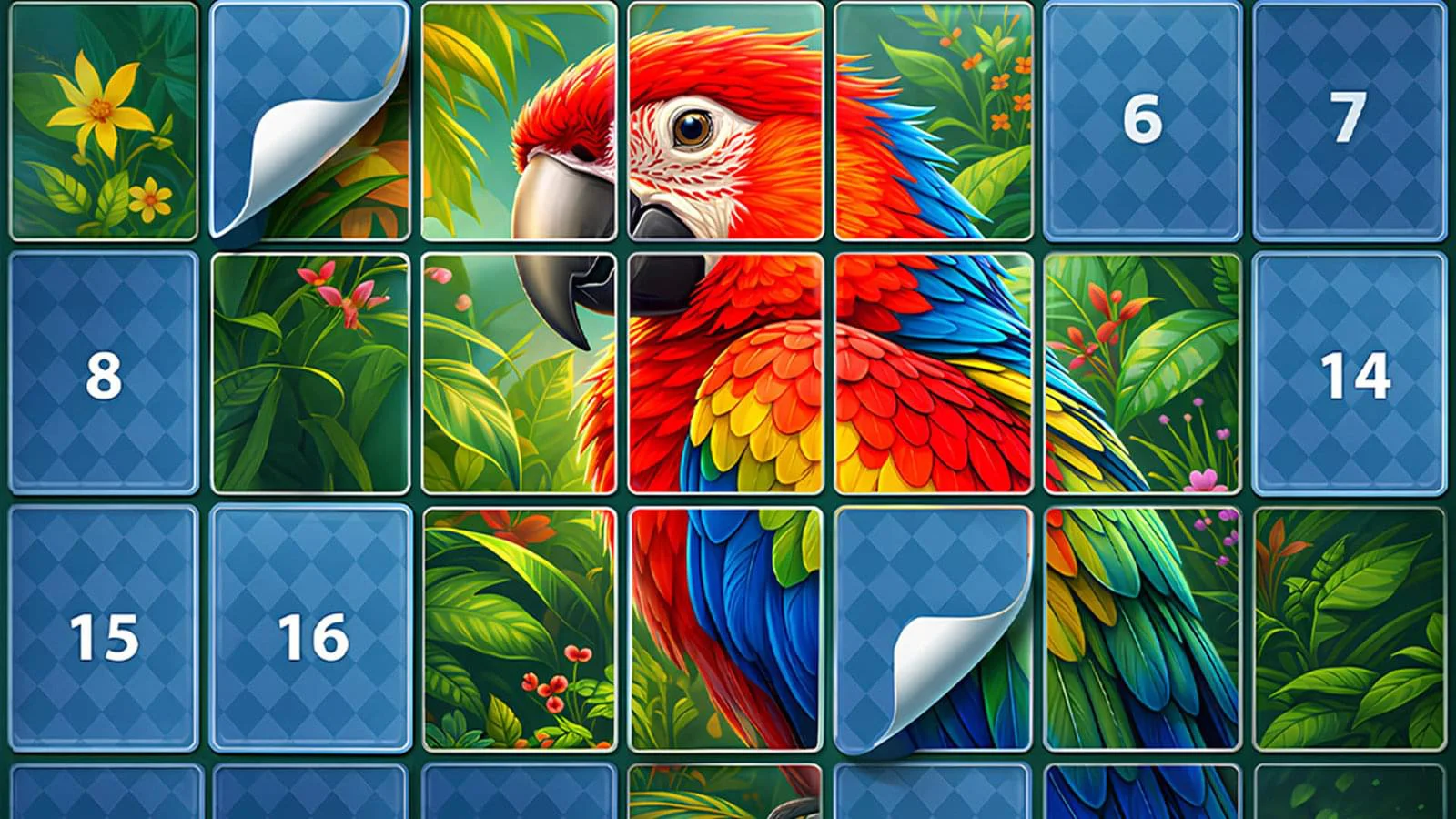
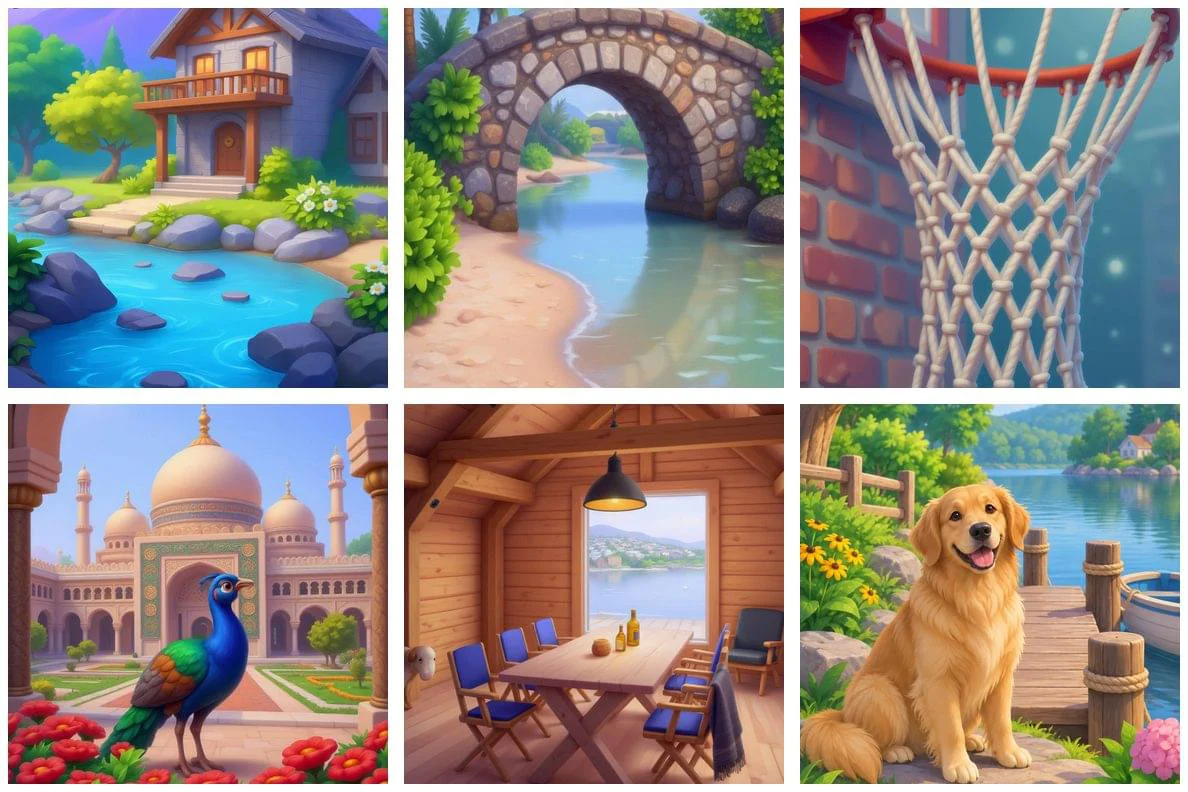
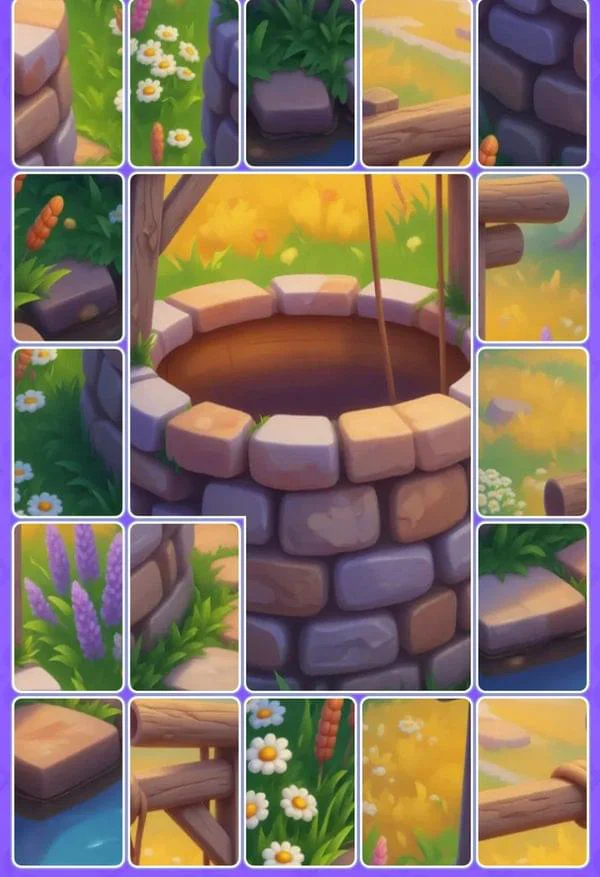
Every level of Jigsaw Cards is one picture cut into a grid of cards, from 4×4 up to 6×6. All the cards are already on the board, there is no pile to dig through and no empty space. They are simply in the wrong places.
Drag a card onto any other spot and the two swap: the card you dropped takes the new place, and whatever was there slides back into the spot you just emptied. Nothing is ever lost and nothing can fall off the board.
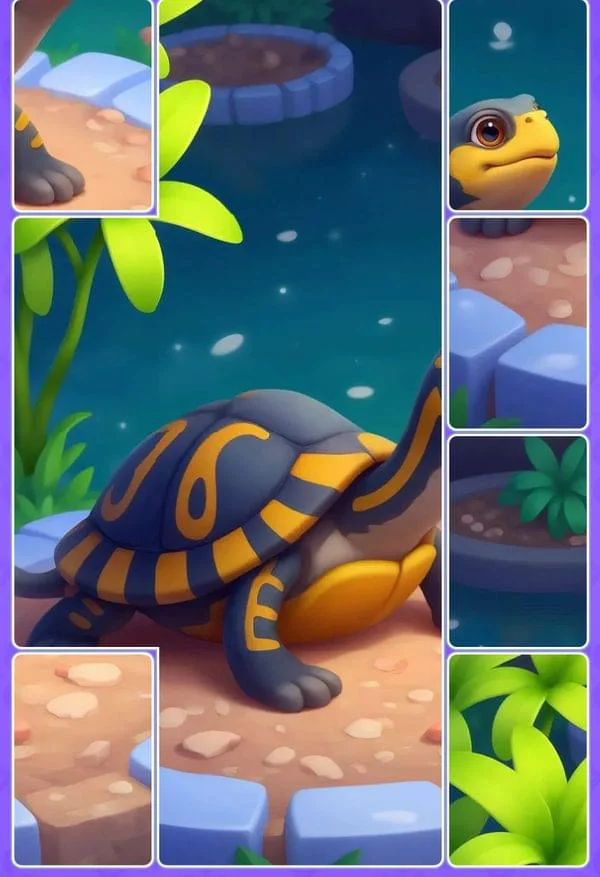
The moment two cards that belong side by side end up next to each other, they lock together with a little flash. From then on they move as one piece. Drag that piece and every card under it gets pushed out of the way the same way a single card does. Groups grow into bigger groups, the board turns into a handful of large blocks, and the last few moves usually close the picture in seconds.
A level ends when the whole board is one piece. There is no timer, no move counter and no way to lose, so you can take a break in the middle of a picture and come back to it later exactly as you left it.
How the levels are made
Each level is a single picture and a grid size. When you open a level, the cards are shuffled in a fixed way for that level number, so the board you see is the same one every other player sees on that level. If a friend is stuck on level 300, you can compare notes.
Difficulty comes only from the size of the grid. Most levels are 4×4 or 5×5. Harder levels use a 6×6 grid, and the last level in every set of fifteen is a "super hard" 6×6. The daily puzzles in the calendar are always 6×6. A 6×6 board has 36 cards instead of 16, so there are many more places a card can be, and the picture details you use to orient yourself are smaller.
Because a level can only end in a finished picture, nothing in the design depends on luck or on running out of something. The game does not get harder by taking things away from you. It gets harder by giving you a bigger picture.
New pictures arrive with almost every update, usually every two weeks, and the game passed 2,400 levels in October 2026.
Tips
- Start with what stands out. A face, a sign, a bright flower or a strong edge is easy to recognise on a single card. Put those cards together first and use the group as an anchor for the rest.
- Look for edges and corners. Cards with a hard border of sky, wall or table usually belong on an edge of the picture. Corners are often the easiest cards to place for certain.
- Move groups, not single cards. Once a group exists, place the group first, then fill the cards around it. Dragging a big group into its true position often pushes several loose cards into better spots at the same time.
- Watch where the swapped card goes. The card you displace always goes to the spot you left. Sometimes that is exactly where it belongs, so plan two cards at a time.
- Colour gradients help on sky and water. On calm areas with little detail, sort the cards from light to dark, then fine-tune.
- Save Hint and Magnet for the 6×6 boards. On 4×4 most pictures are quick by eye. On a super hard 6×6 the Magnet booster, which drops the four pieces nearest the centre straight into their true places, saves the most time.

By the numbers
As of November 2026, Jigsaw Cards has been played by over 1.5 million people in 231 countries and territories. Players have finished more than 56 million pictures since November 2025. Around 169,000 players have gone past level 100, and about 58,000 have gone past level 1,000.
It is our most relaxed game in the numbers as well: players finish almost every level on the first try, and a typical picture takes under two minutes. Players use about one Hint for every ten pictures they finish.
Updates
- October 2026: new levels from 1,966 onward, and a new town area with five buildings to restore: an arch, a tea house, a picnic spot, a well and a toy corner.
- September 2026: new weekly goals, a level mastery challenge and a treasure search; another new area (a cottage, a food truck, swings, a fountain and a villa); a daily mini game; levels 1,501 to 1,965.
- September 2026: the game now cheers when you place cards correctly, and the Hint got a clearer look.
- August 2026: 270 new levels and new sounds for cards appearing, joining and clearing.
- July 2026: 375 new levels across two updates, two new areas, a new animation for the Magic Puzzles event, and vibration when the cards are dealt.
- June 2026: the Puzzle Master tournament and 180 new levels.
- May 2026: one coin currency instead of two, a short tutorial for each booster, and a Support button in the settings.
Guides
Frequently asked questions
How do I spend coins?
Coins buy boosters. When you have no Hint or Magnet left, tap its button under the board during a level and it is bought with coins; if a free version is on offer, the game shows that first.
A daily or weekly task asks me to spend coins. How do I do that?
Buy a Hint or a Magnet with coins during a level: tap the booster button when you have none left. Every coin spent that way counts toward the task.
How do the boosters work, and what is the second one?
The light bulb is Hint: it shows one piece sliding next to the piece it belongs beside. The second booster is Magnet: it takes the four pieces nearest the centre and puts them into their true places.
What are the small puzzle pieces that light up on some cards?
That is the Magic Puzzles event. A marked card has to be joined to a correct neighbour within a few moves to collect it; if you take too long, the mark disappears.
Can I lose a level?
No. There is no timer, no move limit and no wrong move that ends the game. A picture is finished when the whole board has joined into one piece, and you can leave a level and come back to it as it was.
I have finished all the buildings, and the next area does not open. What now?
New areas to restore come with updates (the latest added an arch, a tea house, a picnic spot, a well and toys in October 2026). Until the next one arrives, the levels keep going.
I am past the last level and nothing new seems to happen. Is the game over?
No. After the newest level the game keeps giving you pictures from earlier sets, and new levels arrive in almost every update, usually every two weeks.
Will there be more pictures?
Yes. Nearly every update adds new pictures, and the game passed 2,400 levels in October 2026.